
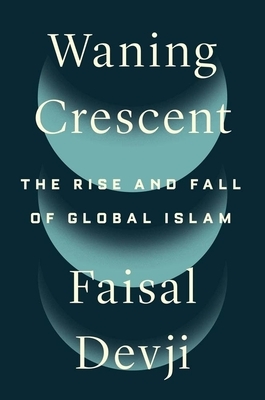
A compelling examination of the rise of Islam as a global historical actor
Until the nineteenth century, Islam was variously understood as a set of beliefs and practices. But after Muslims began to see their faith as an historical actor on the world stage, they needed to narrate Islam’s birth anew as well as to imagine its possible death. Faisal Devji argues that this change, sparked by the crisis of Muslim sovereignty in the age of European empire, provided a way of thinking about agency in a global context: an Islam liberated from the authority of kings and clerics had the potential to represent the human race itself as a newly empirical reality. Ordinary Muslims, now recognized as the privileged representatives of Islam, were freed from traditional forms of Islamic authority. However, their conception of Islam as an impersonal actor in history meant that it could not be defined in either religious or political terms. Its existence as a civilizational and later ideological subject also deprived figures like God and the Prophet of their theological subjectivities while robbing the Muslim community of its political agency. Devji illuminates this history and explores its ramifications for the contemporary Muslim world.Author: Faisal Devji
Binding Type: Hardcover
Publisher: Yale University Press
Published: 08/26/2025
Pages: 280
Weight: 1.01lbs
Size: 9.37h x 6.06w x 1.18d
ISBN: 9780300276633
Language: English





Reviews
There are no reviews yet.