
* 2021 AAAS/Subaru SB&F Prize for Excellence in Science Books in Middle Grade Longlist
* 2021 NSTA-CBC Outstanding Science Trade Book
* 2021 EUREKA! Nonfiction Children’s Honor Book
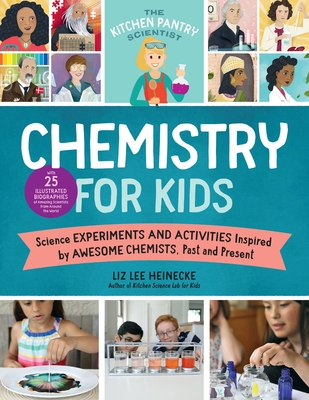
Make soap from soap base, oil, and citrus peels.
Modern application: medical disinfectants Joseph Priestly (b. 1733)
Carbonate a beverage using CO2 from yeast or baking soda and vinegar mixture.
Modern application: soda fountains Alessandra Volta (b. 1745)
Make a battery using a series of lemons and use it to light an LED.
Modern application: car battery Tu Youyou (b. 1930)
Extract compounds from plants.
Modern application: pharmaceuticals and cosmetics People have been tinkering with chemistry for thousands of years. Whether out of curiosity or by necessity, Homo sapiens have long loved to play with fire: mixing and boiling concoctions to see what interesting, beautiful, and useful amalgamations they could create. Early humans ground pigments to create durable paint for cave walls, and over the next 70 thousand years or so as civilizations took hold around the globe, people learned to make better medicines and discovered how to extract, mix, and smelt metals for cooking vessels, weapons, and jewelry. Early chemists distilled perfume, made soap, and perfected natural inks and dyes. Modern chemistry was born around 250 years ago, when measurement, mathematics, and the scientific method were officially applied to experimentation. In 1896, after the first draft of the periodic table was published, scientists rushed to fill in the blanks. The elemental discoveries that followed gave scientists the tools to visualize the building blocks of matter for the first time in history, and they proceeded to deconstruct the atom. Since then, discovery has accelerated at an unprecedented rate. At times, modern chemistry and its creations have caused heartbreaking, unthinkable harm, but more often than not, it makes our lives better. With this fascinating, hands-on exploration of the history of chemistry, inspire the next generation of great scientists.
Dig into even more incredible science history from The Kitchen Pantry Scientist series with: Biology for Kids, Physics for Kids, Math for Kids, and Ecology for Kids.
Author: Liz Lee Heinecke
Binding Type: Paperback
Publisher: Quarry Books
Published: 05/05/2020
Series: The Kitchen Pantry Scientist #1
Pages: 128
Weight: 1.1lbs
Size: 10.90h x 8.40w x 0.50d
ISBN: 9781631598302
Language: English


Reviews
There are no reviews yet.